Architecture and Environment in the Medieval Maghreb
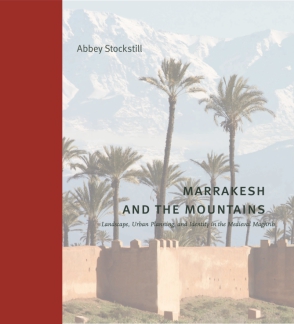
| What is Islamic architecture? In this follow-up to our ten-part seires on The Making of the Islamic World, we explore that question with Prof. Abbey Stockstill, author of Marrakesh and the Mountains: Landscape, Urban Planning, and Identity in the Medieval Maghrib. Our conversation centers on the imperial city of Marrakesh, which was shaped by two successive dynasties — the Almoravids and the Almohads — with two competing visions of Muslim religious and political life that left an indelible imprint on the Maghreb region from the Sahara to al-Andalus. As Prof. Stockstill explains, understanding the architectural legacy of these dynasties extends far beyond the confines of monumental features of mosques and minarets. Natural landscapes and agricultural spaces played an equally vital role in the built environment of medieval Morocco, which in turn influenced the development of architecture in what is now southern Spain during the last centuries of Islamic rule.

 | Click for RSS Feed | 
|

|
What is Islamic architecture? In this follow-up to our ten-part seires on The Making of the Islamic World, we explore that question with Prof. Abbey Stockstill, author of Marrakesh and the Mountains: Landscape, Urban Planning, and Identity in the Medieval Maghrib. Our conversation centers on the imperial city of Marrakesh, which was shaped by two successive dynasties — the Almoravids and the Almohads — with two competing visions of Muslim religious and political life that left an indelible imprint on the Maghreb region from the Sahara to al-Andalus. As Prof. Stockstill explains, understanding the architectural legacy of these dynasties extends far beyond the confines of monumental features of mosques and minarets. Natural landscapes and agricultural spaces played an equally vital role in the built environment of medieval Morocco, which in turn influenced the development of architecture in what is now southern Spain during the last centuries of Islamic rule.
Contributor Bios
 |
Abbey Stockstill is Associate Professor and the Thomas Jefferson Foundation Chair of Architectural History at UVA. Her book, Marrakesh & the Mountains: Landscape, Urban Planning, and Identity in the Medieval Maghreb, traces the development of Marrakesh in the twelfth century as a new kind of metropolis in the Islamic west, bridging multivalent identities through a sensitive manipulation of the surrounding environment. |
 |
Chris Gratien is Associate Professor of History at University of Virginia, where he teaches classes on global environmental history and the Middle East. His first book, The Unsettled Plain: An Environmental History of the Late Ottoman Frontier, explores the social and environmental transformation of the Adana region of Southern Turkey during the 19th and 20th century. His current project, provisionally titled The Book and the Sword: Civil War and Reconstruction in Late Ottoman Syria, offers a global microhistory of the Tanzimat period, centered on the unsolved murder of an American missionary in the Ottoman Empire. |
Credits
Episode No. 584
Release Date: 25 April 2026
Recording Location: University of Virginia
Sound production by Chris Gratien
Music: Komiku - Un désert; Badlands by Silicon Transmitter; TRG Banks - Across the mountainous region
Bibliography and images courtesy of Abbey Stockstill
Release Date: 25 April 2026
Recording Location: University of Virginia
Sound production by Chris Gratien
Music: Komiku - Un désert; Badlands by Silicon Transmitter; TRG Banks - Across the mountainous region
Bibliography and images courtesy of Abbey Stockstill
Further Listening
 |
Wendell Marsh, Ann McDougall, Rabiat Akande | 488
1/12/21
|
The Making of the Islamic World
|
 |
Justin Stearns | 535
12/14/22
|
The Natural Sciences in Early Modern Morocco |
 |
Mayte Green-Mercado | 525
4/11/22
|
Moriscos and the Early Modern Mediterranean |
 |
Fahad Bishara, Jeannie Miller, Mohamad Ballan | 484
12/18/20
|
The Making of the Islamic World
|
 |
Saadia Yacoob, Intisar Rabb, Joshua White, Fahad Bishara, Joel Blecher | 480
12/4/20
|
The Making of the Islamic World
|
 |
Wendy M. K. Shaw | 533
11/3/22
|
What is Islamic Art? |
Images

Agdal walls looking toward the Atlas, image courtesy of Johnny Greig

Olive groves in the Agdal, photo by A. Stockstill

Almoravid empire depicted in the Catalan atlas, Abraham Cresques, c. Late 1370s, BnF

Detail of the Kutubiyya minbar, with jujube used in the four irregular panels surrounding the central eight-pointed star, photo by A. Stockstill

Map of the Maghreb from a 13th-century copy of al-Idrisi’s Nuzhat al-mushtāq fī ikhtirāq al-āfāq (“Book of Pleasant Journeys into Faraway Lands,” for. 89v-90r, BnF MS Arabe 2221
Further Reading
Ramzi Rhouigi, Inventing the Berbers (UPenn Press, 2019)
Amira Bennison, The Almoravid and Almohad Empires (University of Edinburgh Press, 2016)
Somaiyeh Falahat, Cities and Metaphors: Beyond Imaginaries of Islamic Urban Space (Routledge, 2018)
Abbey Stockstill, “Mediterranean Convergence: Trade, Craft, and Notions of Influence in the Kutubiyya Minbar,” The Art Bulletin (2025)
Zayde Antrim, Routes and Realms: The Power of Place in the Early Islamic World (Oxford University Press, 2012)
Mohammed El Faïz, “The Garden Strategy of the Almohad Sultans and Their Successors,” Middle East Garden Traditions: Unity and Diversity (Harvard University Press, 2007)
Maribel Fierro, The Almohad Revolution: Politics and Religion in the Islamic West during the Twelfth-Thirteenth Centuries (Ashgate, 2012)
Akel Isma’il Kahera, Reading the Islamic City: Discursive Practices and Legal Judgment (Lexington Books, 2012)
Ronald Messier, “Rethinking the Almoravids, Rethinking Ibn Khaldun,” The Journal of North African Studies 6 (2001)


Comments
Post a Comment
Due to an overwhelming amount of spam, we no longer read comments submitted to the blog.