Hebrew Orientalism in Late Ottoman and British Palestine
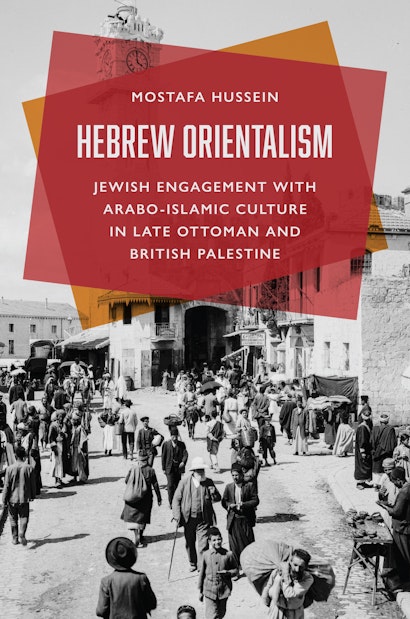
| Zionism, as a cultural and political movement of Hebrew revival, sought to forge a connection between the modern Jewish people and a deep past located in the geography of late Ottoman and British Palestine. As our guest in this episode, Mostafa Hussein, explores in a new book, this revival in turn birthed an intellectual project of intimate and often contradictory engagement with Arabo-Islamic culture, a process that he describes as Hebrew Orientalism. As we discuss, Jewish orientalists from diverse backgrounds between East and West developed an interest in a variety of medieval Arabic texts, drawing on history, geography, botany, literature, and linguistics to forge cultural exchange in service of Zionist aspirations. Whether these scholars imagined a future of conflict or coexistence in Palestine, their work illuminates how Arab cultural heritage was integral to the remaking of modern Jewish identity.

 | Click for RSS Feed | 
|

|
Zionism, as a cultural and political movement of Hebrew revival, sought to forge a connection between the modern Jewish people and a deep past located in the geography of late Ottoman and British Palestine. As our guest in this episode, Mostafa Hussein, explores in a new book, this revival therefore in turn birthed an intellectual project of intimate and often contradictory engagement with Arabo-Islamic culture, a process that he describes as Hebrew Orientalism. As we discuss, Jewish orientalists from diverse backgrounds between East and West developed an interest in a variety of medieval Arabic texts, drawing on history, geography, botany, literature, and linguistics to forge cultural exchange in service of Zionist aspirations. Whether these scholars imagined a future of conflict or coexistence in Palestine, their work illuminates how Arab cultural heritage was integral to the remaking of modern Jewish identity.
Contributor Bios
 |
Mostafa Hussein is an Assistant Professor of Jewish-Muslim studies in the Judaic Studies Department at the University of Michigan, Ann Arbor. His scholarship focuses on Jewish-Muslim intersectionalities, shedding light on the complex cultural and historical interconnections between these communities. |
 |
Chris Gratien is Associate Professor of History at University of Virginia, where he teaches classes on global environmental history and the Middle East. His first book, The Unsettled Plain: An Environmental History of the Late Ottoman Frontier, explores the social and environmental transformation of the Adana region of Southern Turkey during the 19th and 20th century. His current project, provisionally titled The Book and the Sword: Civil War and Reconstruction in Late Ottoman Syria, offers a global microhistory of the Tanzimat period, centered on the unsolved murder of an American missionary in the Ottoman Empire. |
Credits
Episode No. 595
Release Date: 12 September 2026
Sound production by Chris Gratien
Closing music by kara güneş
Bibliography courtesy of Mostafa Hussein
Release Date: 12 September 2026
Sound production by Chris Gratien
Closing music by kara güneş
Bibliography courtesy of Mostafa Hussein
Further Listening
 |
Zeynep Çelik | 399
1/26/19
|
Orientalism in the Ottoman Empire |
 |
Esmat Elhalaby | 580
2/11/26
|
|
 |
Maha Nassar | 558
1/8/24
|
|
 |
Leena Dallasheh | 563
3/24/24
|
|
 |
Liat Kozma | 196
8/19/15
|
Sexology in Hebrew and Arabic |
 |
Rashid Khalidi | 553
11/19/23
|
The Hundred Years' War on Palestine |
Further Reading
Abigail Jacobson and Moshe Naor, Oriental Neighbors: Middle Eastern Jews and Arabs in Mandatory Palestine (Waltham, MA: Brandeis University Press, 2016).
Louis A. Fishman, Jews and Palestinians in the Late Ottoman Era, 1908–1914: Claiming the Homeland (Edinburgh: Edinburgh University Press, 2020).
Yael Zerubavel, Desert in the Promised Land (Stanford, CA: Stanford University Press, 2018).
Moshe Behar and Zvi Ben-Dor Benite, Modern Middle Eastern Jewish Thought: Writings on Identity, Politics, and Culture, 1893–1958 (Waltham, MA: Brandeis University Press, 2013).
Michelle U. Campos, Ottoman Brothers: Muslims, Christians, and Jews in Early Twentieth-Century Palestine (Stanford, CA: Stanford University Press, 2010).
Ivan Davidson Kalmar and Derek Jonathan Penslar, eds., Orientalism and the Jews (Hanover, NH: University Press of New England, 2005).
Gil Eyal, The Disenchantment of the Orient: Expertise in Arab Affairs and the Israeli State (Stanford, CA: Stanford University Press, 2006).
Rachel Busbridge, “Israel-Palestine and the Settler Colonial ‘Turn’: From Interpretation to Decolonization,” Theory, Culture & Society 35, no. 1 (2018): 91–115.
Meron Benvenisti, Sacred Landscape: The Buried History of the Holy Land since 1948, trans. Maxine Kaufman-Lacusta (Berkeley: University of California Press, 2000).


Comments
Post a Comment
Due to an overwhelming amount of spam, we no longer read comments submitted to the blog.