The Ottoman World of Sports
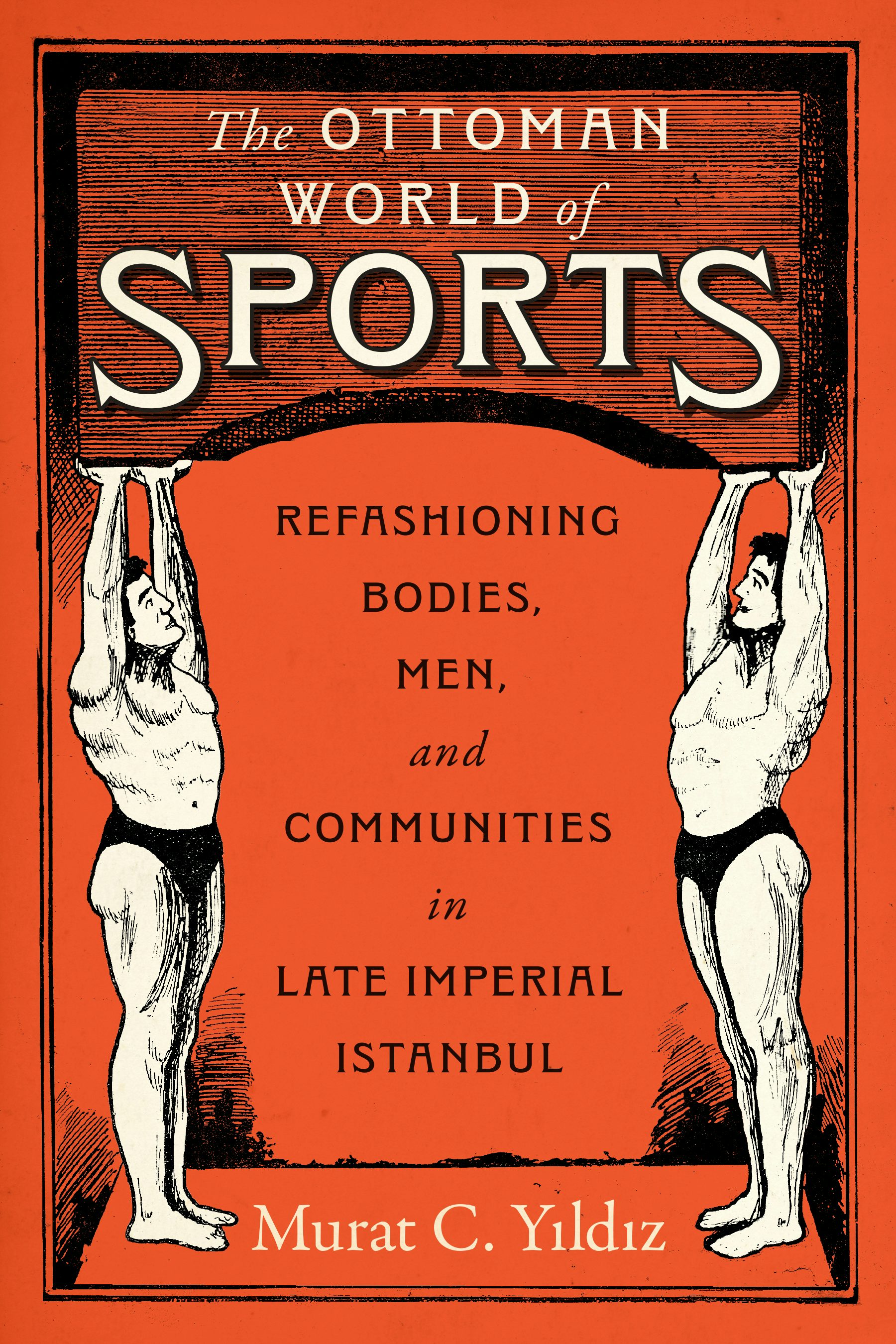
| In the late Ottoman capital, imperial politics became a field of collaboration and competition between Muslim, Christian, and Jewish communities, especially in the years following the 1908 constitutional revolution. And as our guest Murat Yıldız argues in a new book, the world of sports also emerged as an arena of political contestation, as gymnasts, footballers, weightlifters, boxers, coaches, teachers, journalists, and fans pursued a civic project that blended athletics, aesthetics, morality, and community. Sport did not erase the communal boundaries that existed off the field, but it often transcended them, as middle and upper class men participated in a shared culture that equated the physical development of the body with the moral development of the person. In this conversation, we explore the Ottoman world of sports at the end of empire, as the growth of a multiethnic civil society facilitated to the proliferation of sports club and writing about athletics, gender, and the body in the Ottoman public press.

 | Click for RSS Feed | 
|

|
In the late Ottoman capital, imperial politics became a field of collaboration and competition between Muslim, Christian, and Jewish communities, especially in the years following the 1908 constitutional revolution. And as our guest Murat Yıldız argues in a new book, the world of sports also emerged as an arena of political contestation, as gymnasts, footballers, weightlifters, boxers, coaches, teachers, journalists, and fans pursued a civic project that blended athletics, aesthetics, morality, and community. Sport did not erase the communal boundaries that existed off the field, but it often transcended them, as middle and upper class men participated in a shared culture that equated the physical development of the body with the moral development of the person. In this conversation, we explore the Ottoman world of sports at the end of empire, as the growth of a multiethnic civil society facilitated to the proliferation of sports club and writing about athletics, gender, and the body in the Ottoman public press.
Contributor Bios
 |
Murat Yıldız is Associate Professor of History at Skidmore College, where he teaches classes on popular culture, communal boundaries, the body, and the Middle East. He is the author of The Ottoman World of Sports: Refashioning Bodies, Men, and Communities in Late Ottoman Istanbul (The University of Texas Press). |
 |
Sam Dolbee is Assistant Professor of History at Vanderbilt University, where he teaches classes on environment, disease, and the modern Middle East. His book Locusts of Power is out now with Cambridge University Press. |
Credits
Episode No. 570
Release Date: 2 August 2026
Sound production by Sam Dolbee
Music: Zé Trigueiros
Images and bibliography courtesy of Murat Yıldız
Release Date: 2 August 2026
Sound production by Sam Dolbee
Music: Zé Trigueiros
Images and bibliography courtesy of Murat Yıldız
Further Listening
 |
Yakoob Ahmed | 228
3/4/16
|
Ottoman Ulema and the Second Constitutional Revolution |
 |
Vangelis Kechriotis | 194
7/29/15
|
Ottomanism with a Greek Face |
 |
Stefo Benlisoy | 392
12/8/18
|
II. Meşrutiyet İstanbul'unda Sosyalist Rumlar ve İşçiler |
 |
Y. Doğan Çetinkaya | 410
4/17/19
|
II. Meşrutiyet'te Kitle Hareketi, Boykotlar ve Milliyetçilik |
 |
Alia Mossallam & Kyle Anderson | 555
12/4/23
|
The Sound of Revolution in Modern Egypt
|
 |
Sylvia Alajaji | 461
4/23/20
|
Music and Silence in the Armenian Diaspora |
Images

Postcard of Mekteb-i Sultani’s gymnastics students captioned incorrectly as gymnasts from a Greek school in Pera, c. early-twentieth century. (Courtesy of author’s personal collection)

A thirteen-year-old student sketching his love of football in school. İsmail Hakkı Baltacıoğlu, Maarif-i Umumiye Nezareti: Resmin usul-ı tedrisi, 1915 (Courtesy of Atatürk Library)

Group photo of the Hercules Gymnastics Association (Gymnastikos Syllogos Iraklis), c. early-twentieth century. (Courtesy of Kurtuluş Spor Kulübü)

The new club symbol of the Makkabi Jewish Gymnastics Society (Société juive de gymnastique “Maccabi”) after the 1908 Ottoman Revolution, c. early-twentieth century. (Courtesy of Daniel Ziffer)

Istanbul’s fastest mile-runner, Vahram Papazian, featured in the Armenian sports magazine Marmnamarz (Physical Training), Marmnamarz June 1911 (Courtesy of Library of Congress)

Visual and textual representation of the upcoming football match between “Turks” an “Romanians” on the front page of Istanbul’s Ottoman-Turkish daily press. Tasvir-i Efkar 17 April 1914. (Courtesy of Atatürk Library)
Select Bibliography
Akın, Yiğit. “Gürbüz ve Yavuz Evlatlar”: Erken Cumhuriyet’te Beden Terbiyesi ve Spor (Istanbul: İletişim Yayınları, 2004).
Campos, Michelle U. Ottoman Brothers: Muslims, Christians, and Jews in Early Twentieth-Century Palestine (Stanford, CA: Stanford University Press, 2011).
Cohen, Julia Phillips. Becoming Ottomans: Sephardi Jews and Imperial Citizenship in the Modern Era (Oxford, UK: Oxford University Press, 2014).
Der Matossian, Bedross. Shattered Dreams of Revolution: From Liberty to Violence in the Late Ottoman Empire (Stanford, CA: Stanford University Press, 2016)
Ersoy, Ahmet. “Ottomans and the Kodak Galaxy: Archiving Everyday Life and Historical Space in Ottoman Illustrated Journals.” History of Photography 40 (2016): 330–357.
Goldblatt, David. The Games: A Global History of the Olympics (New York: W. W. Norton & Company, 2016)
Hafez, Melis. Inventing Laziness: The Culture of Productivity in Late Ottoman Society (Cambridge, UK: Cambridge University Press, 2021).
Heffernan, Conor. When Fitness Went Global (Bloomsbury, 2025).
Jacob, Wilson Chacko. Working Out Egypt: Effendi Masculinity and Colonial Modernity, 1870–1940 (Durham, NC: Duke University Press, 2011).
Karaca, Nilay, and Seda Kula, eds. Spectacle, Entertainment, and Recreation in Late Ottoman and Early Turkish Republican Cities (Bristol, UK: Intellect, 2023).
Makdisi, Ussama. Age of Coexistence: The Ecumenical Frame and the Making of the Modern Arab World (Oakland: University of California Press, 2020)
McManus, John. Welcome to Hell? In Search of the Real Turkish Football (London: Weidenfeld & Nicolson, 2018)
"Müthiş türk," Hürriyet, 2 August 1999, https://www.hurriyet.com.tr/sporarena/muthis-turk-39094117
Reiche, Danyel Tobias and Tamir Sorek, eds. Sports, Society, and Politics in the Middle East (London: Oxford University Press, 2019).
Yüce, Mehmet. Osmanlı Melekleri: Futbol Tarihimizin Kadim Devreleri: Türkiye Futbol Tarihi- Birinci Cilt (Istanbul: İletişim Yayınları, 2014).


Comments
Post a Comment
Due to an overwhelming amount of spam, we no longer read comments submitted to the blog.